Abstract
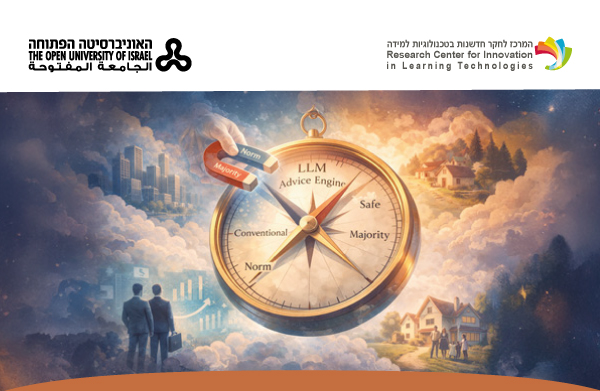
The era of Large Language Models (LLMs) has enabled humans to communicate directly with AIs. For efficient communication, users are encouraged to add contextual information to prompts; yet, previous research shows that explicitly mentioning stereotypical group affiliation can cause bias. But what happens when we try to avoid such biases by not revealing one’s stereotypical group affiliation? The current research examines whether biased AI advice persists when group affiliation information is only implied and not explicitly provided in prompts. Specifically, we explore whether implied gender affiliation, conveyed through stereotypically gendered professions, affects AI responses to financial advice-seeking prompts. Using GPT-4 API and replicating using GPT-4o API, we initiated 4,800 (2,400 per model) financial advice-seeking interactions. Each prompt included either a "feminine" or "masculine" profession, which served as a gender cue. All prompts asked for identical investment advice. Findings showed that the advice given to implied women differed across several domains from that given to implied men. These findings call attention to implicit biases in LLMs, which are more challenging to identify and debias than explicit biases, and might have significant societal implications.
Bio
Dr. Shir Etgar is an assistant professor in the DAN Department of Communication at Tel Aviv University. Dr. Etgar is a social psychologist who studies the impact of rapid technological changes on the ways in which individuals understand, construct, and interpret their online and offline environments, with the goal of improving individuals’ social information processing in the current technological era. She studies these questions using advanced statistical models.
Dr. Etgar earned her PhD from the Department of Psychology at Tel Aviv University and completed her postdoctoral studies in the Department of Psychology at Columbia University. In between, she spent two fabulous years as a Research Associate at the Research Center for Innovation in Learning Technologies at the Open University.